

Islam is a beautiful religion that teaches us peace, kindness, honesty, patience, and respect for others. It provides complete guidance for every aspect of life. Muslims believe in Allah Almighty and follow the teachings of the Holy Quran and Prophet Muhammad (peace be upon him). Islam is not only about worship; it also teaches us how to become better human beings and live peacefully with others.
The Importance of Prayer in Islam
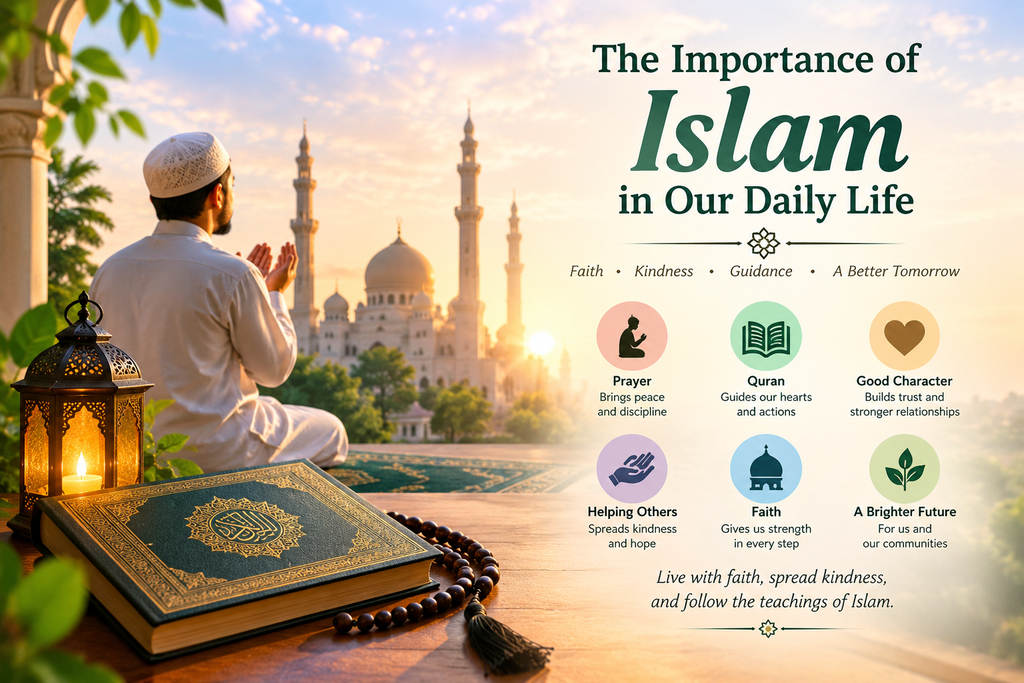
Prayer, known as Salah, is one of the five pillars of Islam. Muslims are required to offer five daily prayers to remember Allah and strengthen their faith. Prayer helps people develop discipline, patience, and inner peace. It reminds us that Allah is always aware of our actions and that we should live according to His guidance.
Regular prayer also encourages Muslims to take a break from their busy lives and focus on their spiritual connection with Allah. It teaches humility and reminds us that everyone is equal before their Creator.
Kindness and Good Character
Islam strongly emphasizes kindness and good manners. Muslims are encouraged to respect their parents, care for their neighbors, help the poor, and treat everyone fairly. A kind word, a sincere smile, or a small act of charity can make a meaningful difference in someone’s life.
Prophet Muhammad (peace be upon him) demonstrated excellent character through his honesty, mercy, patience, and compassion. Muslims should follow his example in their daily lives. They should avoid lying, cheating, backbiting, and hurting others through their words or actions.
Good character is an essential part of Islamic teachings because it helps build trust, strengthen relationships, and create a peaceful society.
The Importance of the Holy Quran
The Holy Quran is the sacred book of Islam and a source of guidance for Muslims. It teaches important lessons about faith, justice, forgiveness, gratitude, and responsibility. Reading the Quran regularly helps Muslims understand their religion and remember their duties toward Allah and humanity.
However, reading the Quran should be accompanied by understanding and practicing its teachings. Muslims should try to apply its guidance in their personal lives, family relationships, and interactions with others.
Helping Others and Giving Charity
Islam encourages Muslims to help people who are struggling. Charity, known as Sadaqah, can include giving money, providing food, helping someone in need, or offering useful advice. Zakat, one of the five pillars of Islam, requires eligible Muslims to give a prescribed portion of their wealth to eligible recipients.
Helping others develops compassion and reduces selfishness. It reminds us that wealth and blessings are gifts from Allah and that we should use them responsibly.
Conclusion
Islam teaches us to live with faith, honesty, patience, gratitude, and kindness. By offering prayers, reading the Holy Quran, respecting our parents, helping the needy, and following the example of Prophet Muhammad (peace be upon him), we can improve ourselves and contribute to a better society.
Every Muslim should try to practice Islamic teachings in daily life. Even small good deeds can bring positive changes to our families, communities, and hearts. A life guided by Islamic values can help us develop stronger faith, better character, and a deeper sense of responsibility toward others.
“We research, test, and compare products so you can buy with confidence without wasting your money.”
+